Your Hives May Be More Exposed This Winter Than You Think — Here Are 7 Things Worth Considering
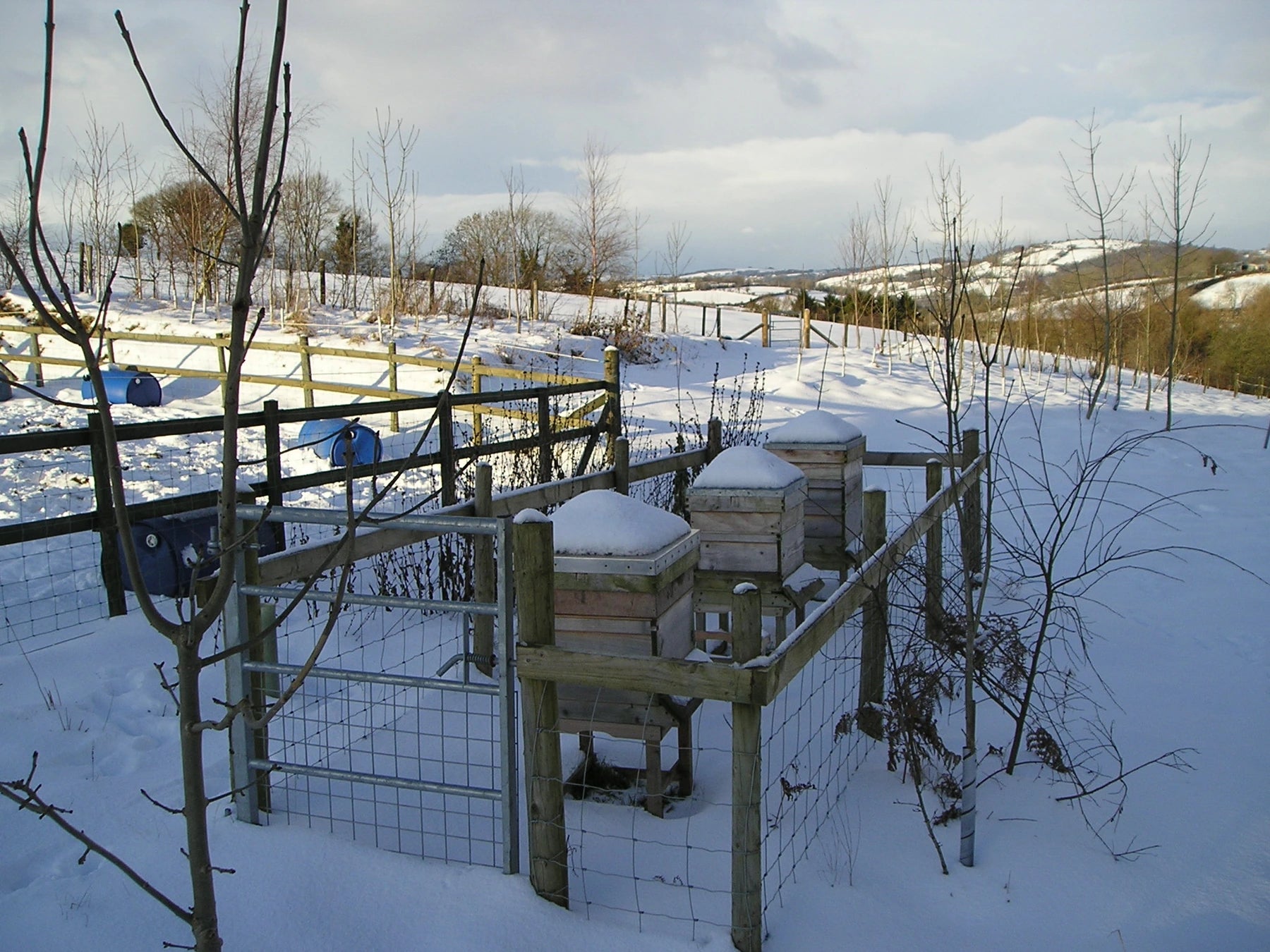
The difference between a sheltered hive and one sitting in an open, windswept field becomes a lot more noticeable when winter arrives.
Picture two beekeepers getting their colonies ready for winter.
One keeps their hives beside a treeline, with nearby buildings and fencing offering some shelter.
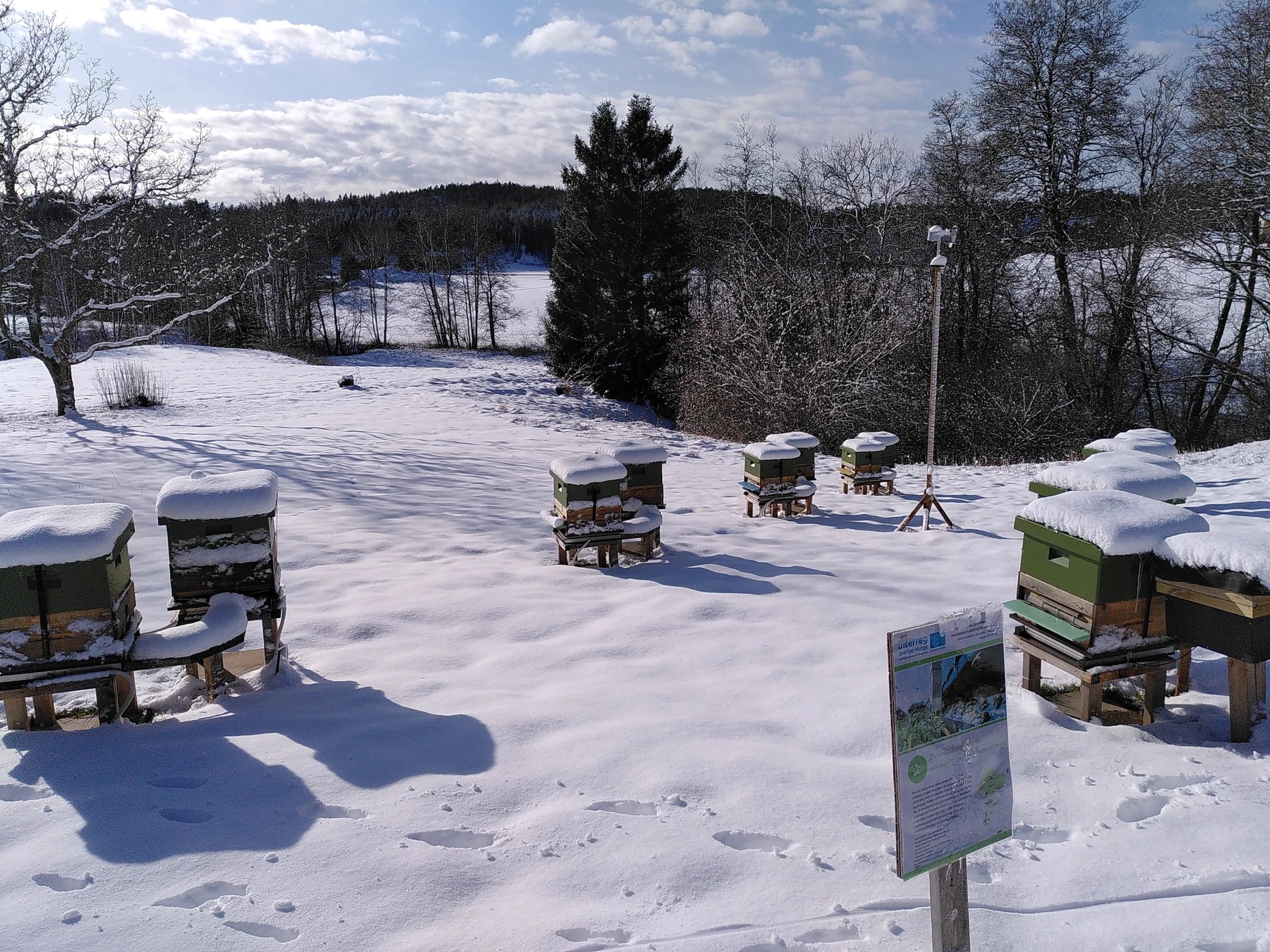
The other has several hives sitting in an open yard, where there's little to interrupt the wind.
Both beekeepers may follow similar winter-preparation routines.
But there's one important difference.
Their hives don't have the same exposure to the elements.
And when you're preparing an apiary for winter, that's something worth thinking about.
Here are seven reasons to take a closer look at exterior hive protection before the colder months arrive.
Your Hive's Location Could Be the Detail You're Overlooking
Think about where your hives are sitting right now.
Maybe they're tucked against a treeline.
Maybe they're protected by a fence or a nearby building.
Or maybe they're standing in the middle of an open yard, surrounded by little more than grass and sky.
During the warmer months, you might not give that location much thought.
It's where your bees live. It's where you check on them. It's where they've been all season.
But the same spot can feel very different once colder weather and seasonal winds arrive.
A hive with natural shelter and a hive exposed on all sides aren't starting winter from the same position.
That's why it's worth looking at your apiary's surroundings before deciding whether exterior protection belongs in your winter-preparation plan.
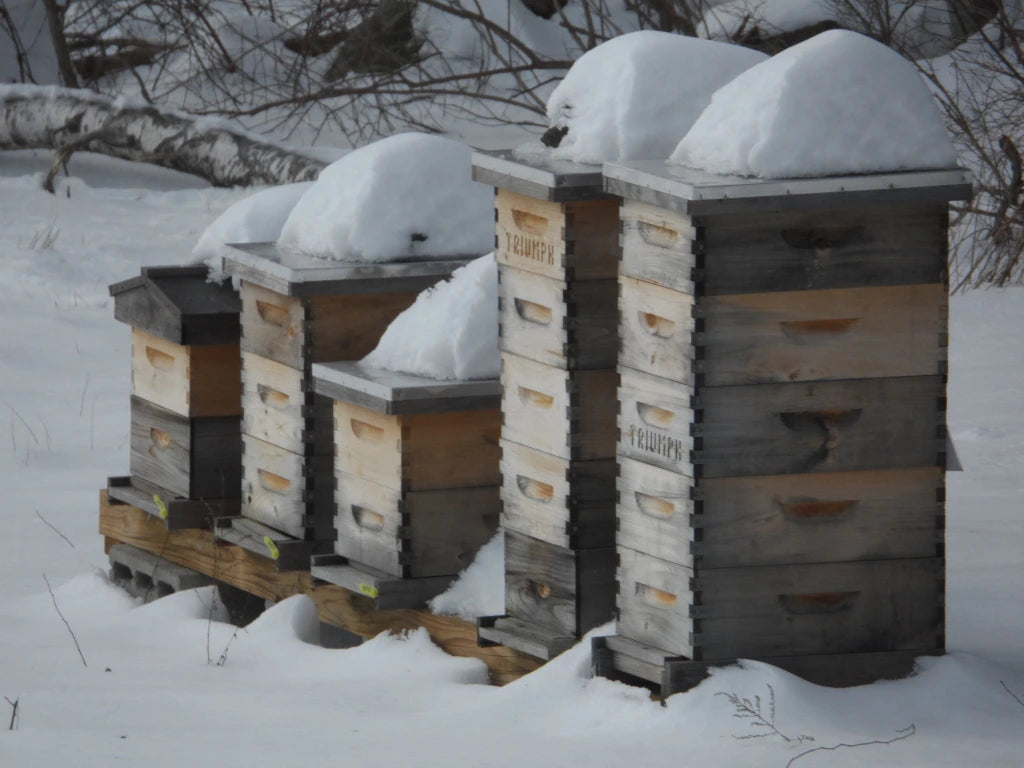
 Sheltered location
Exposed location
Winter Wind Is Easy to Overlook When Everyone's Talking About Cold
When winter approaches, most of the conversation naturally turns toward temperature.
How cold is it going to get?
When should everything be ready?
But temperature isn't the only environmental consideration.
Wind exposure matters, too.
Think about standing outside on a cold day.
There's a noticeable difference between standing behind a sheltered building and standing in the middle of an open field with nothing blocking the wind.
Your hives may face similar differences in exterior exposure depending on where they're positioned.
That's one reason external coverings and windbreaks are used by some beekeepers in colder regions.
It's not about treating every hive the same. It's about recognizing what your particular location is exposed to.
And if your hives sit in a windy, unsheltered area, an exterior covering may be worth considering.
You Can Finish Winter Prep and Still Overlook the Outside of the Hive
There's already plenty to think about before winter.
Colony health.
Food stores.
Equipment.
Moisture management.
Making sure everything is organized before conditions become less convenient for working outside.
With so many responsibilities, it's understandable to focus on the familiar checklist.
But here's another question worth asking:
Have you considered how exposed the outside of your hive boxes will be throughout winter?
For some beekeepers, existing natural shelter may be sufficient.
For others, particularly those in open or windy locations, additional exterior covering may be worth evaluating.
An exterior wrap doesn't replace the important work you've already done.
It simply gives you another preparation option to consider when your hive location calls for it.
Adding an Exterior Covering Doesn't Have to Mean Building One Yourself
Once you've decided an exterior wrap makes sense for your setup, there's another decision to make.
How are you going to cover the hive?
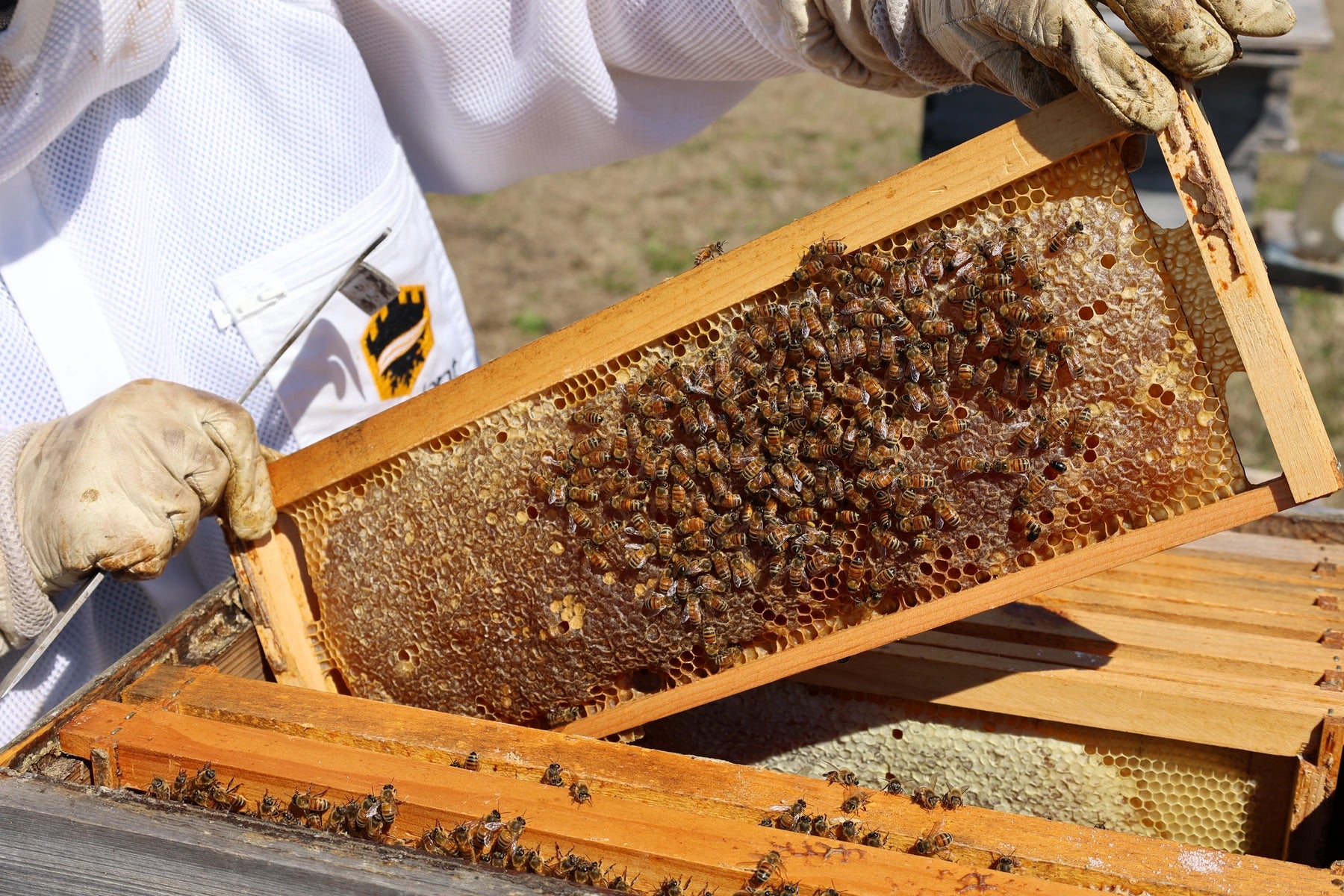
Some beekeepers build their own coverings from foam board or other materials.
They measure, cut, fit, adjust, and find ways to secure everything around the hive.
For those who enjoy making their own equipment, that can be a perfectly reasonable approach.
But not everyone wants another fabrication project during winter preparation.
And you don't have to build a covering from scratch just because you want to use one.
A ready-made wrap offers a more straightforward alternative.
You can choose a finished covering designed for the task, check the appropriate size, and secure it around a compatible hive without constructing the wrap yourself.
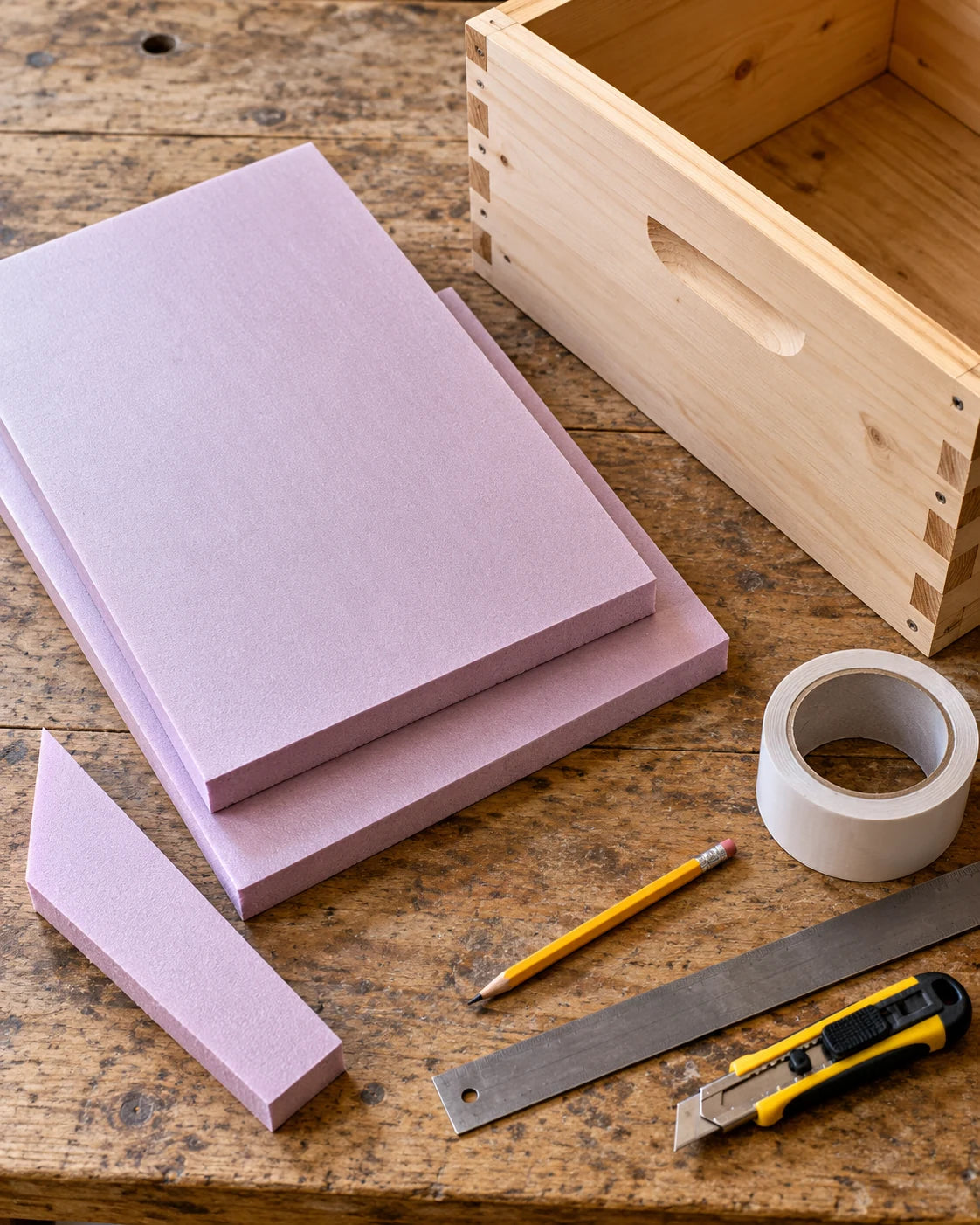
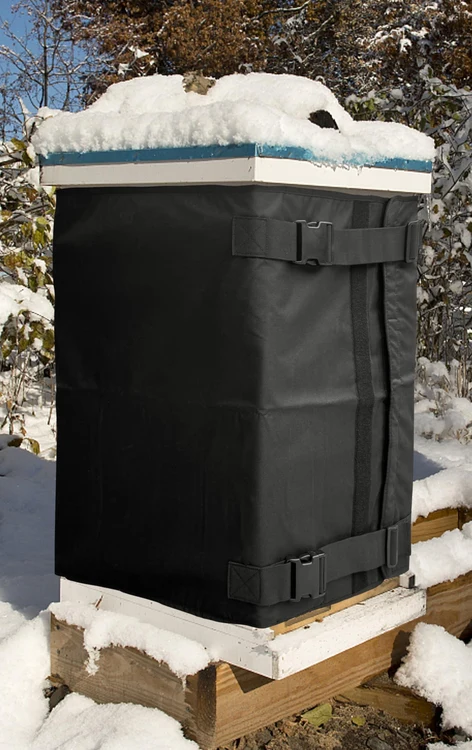
DIY scene is illustrative. Product photograph supplied by the owner.
Meet Bee WinterGuard — A Ready-Made Exterior Covering
That's where Bee WinterGuard comes in.
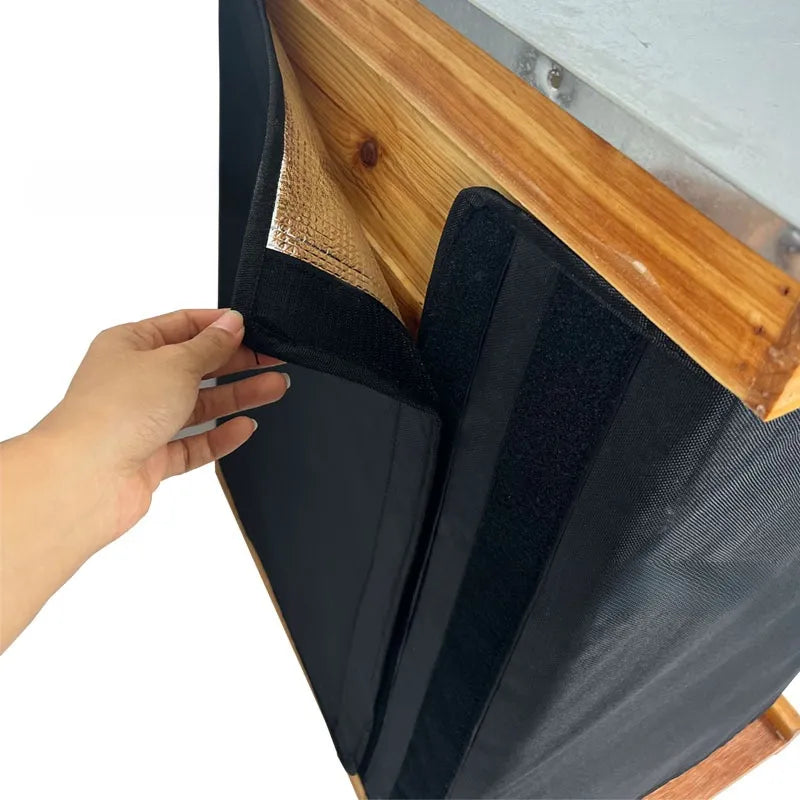
Bee WinterGuard is a finished, four-layer exterior hive wrap designed for compatible Langstroth setups.
Instead of starting with loose insulation materials, you receive a purpose-made covering with its fastening system already incorporated.
It features:
- A 600D Oxford polyester exterior.
- Four-layer material construction.
- Two adjustable buckle straps.
- A hook-and-loop overlap for securing the covering.
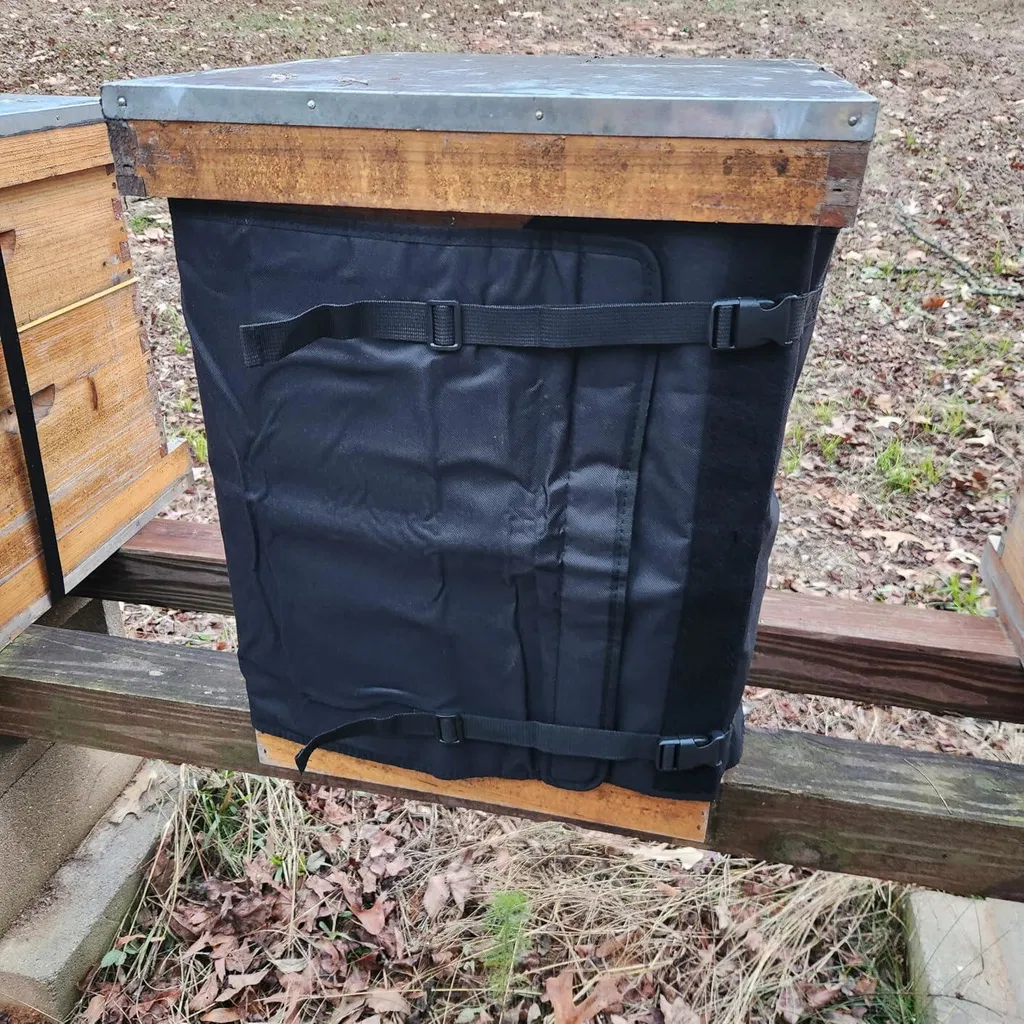
The wrap is positioned around a compatible hive and secured using its existing straps and overlap.
There's still sizing to check, and the covering still needs to be fitted correctly.
But the fabrication work has already been done.
For a beekeeper who has decided exterior wrapping suits their winter setup, Bee WinterGuard offers a convenient way to handle that step.
A Ready-Made Wrap Shouldn't Leave You Guessing About Fit
A covering is only worth considering if it suits the hive you're planning to use it on.
And not every Langstroth arrangement has the same outside dimensions or box configuration.
That's why Bee WinterGuard is available in two published heights:
Standard — 18.1 inches
Extended — 24.8 inches
Both have a published footprint of 21.1 × 17.5 inches.
Before ordering, check the outside measurements and box arrangement of your hive against the product's sizing guidance.
Don't assume a wrap will fit simply because the equipment is described as Langstroth.
The goal is straightforward:
Choose a finished covering that actually suits your setup, rather than making another winter-preparation decision based on guesswork.

Review the fit guidance, explore the available packs, and choose the option that suits your apiary.
Explore Bee WinterGuard →Your Winter Preparation Should Reflect Where Your Hives Actually Sit
Every apiary is different.
Some hives have natural shelter.
Others sit on open ground, where seasonal winds pass across the boxes with little obstruction.
And those differences are worth considering when you're planning your winter preparations.
You don't need to assume every hive requires an external wrap.
But if your conditions make exterior covering a sensible choice, you also don't need to turn that decision into another DIY project.
Bee WinterGuard gives you a ready-made option with four-layer construction and built-in adjustable fastening.
So instead of sourcing materials and building a covering yourself, you can focus on selecting the right size and fitting the finished wrap.
Sometimes the practical decision isn't doing more winter-preparation work. It's choosing equipment that makes one part of the job simpler.
Choose Your Bee WinterGuard Wrap
Bee WinterGuard is available in Standard and Extended sizes, with single-wrap and multi-wrap purchasing options.
| Single | $69.99 |
|---|---|
| 2-pack | $103.60 |
| 3-pack | $132.30 |
| 4-pack | $148.40 |
Bee WinterGuard is an exterior hive covering, not a substitute for proper colony health management, sufficient food stores, moisture management, or other essential winter-preparation practices. Whether external wrapping is appropriate depends on your conditions.
Photo credits
Hero: Beehives in the snow — Marion Phillips; CC BY-SA 2.0. Proportionally resized and cropped for layout.

Reason 1 right and Reason 2: Arrangement of the 16 beehives in two shifted lines in the apiary, Figure 1 — Norrström et al. (2021); CC BY 4.0. Proportionally resized and cropped for layout.